Description
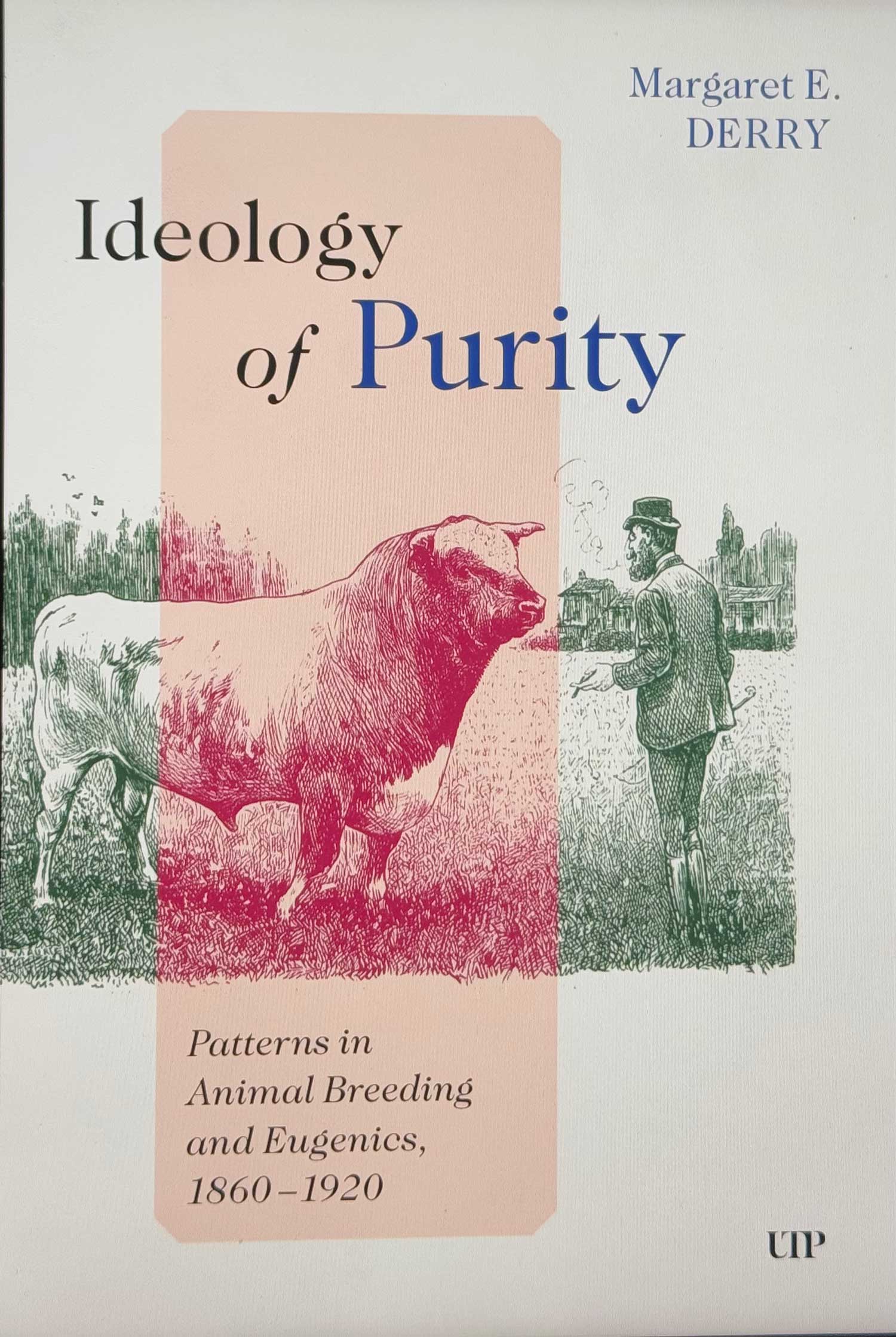
Ideology of Purity challenges the assumption that animal breeding has served as a reliable model for eugenics through a direct comparison of the views of eugenicists with those of animal breeders.
Eugenicists have cited animal breeding to justify their conceptions on human heredity and purity, misunderstanding the true meaning behind these principles and practices. Rather than accepting eugenic rhetoric at face value, this book examines how concepts like purity have been understood and applied differently in animal breeding and human genetics.
REVIEWS:
“Surprisingly, the encyclopedia Oxford Handbook of the History of Eugenics (2012) completely ignored animal breeding. Ideology of Purity shows the error of this omission by demonstrating the importance of the relationship between animal breeders and eugenicists. Margaret E. Derry’s approach is innovative, comparing breeders’ theory and practice and eugenicists’ rhetoric and programs, with a detailed dissection of the work of Francis Galton. It will be essential reading for historians of eugenics and heredity more widely.”
MICHAEL WORBOYS, Emeritus Professor, Centre for the History of science, Technology and Medicine, University of Manchester
“Derry carefully builds case studies from archival sources to explore the relationship between animal pure-breeding and the eugenic movement that emerged in the late nineteenth century. She disentangles the language of elite breeders and government regulation, which was deployed by proponents of genetics, from that of farmers who bred for improvement. Ideology of Purity encourages precision in tracing the sources of influence in eugenic thinking in the animal and human sciences and will provide valuable for scholars of the human-animal divide.”
SCOTT CALVERT, Research Data Librarian, University of Nebraska-Lincoln
“Challenging the long-standing assumption that animal breeding served as a mentor for eugenic theory, Derry offers the first extended treatment of the subject from the perspective of animal breeding. In doing so, she draws on a wealth of sources, from contemporary scientific writing to agricultural records that offer insight into breeders’ practical perspectives. An important and original contribution to the historiography of eugenics, Ideology of Purity complicates and contextualizes the animal-focused rhetoric of eugenics.”
KRISTEN GUEST, Professor, Department of English, University of Northern British Columbia